How to Generate Leads in Digital Marketing
It is also the hardest part. In HubSpot's data, 61% of marketers say generating high-quality leads is their single biggest challenge. Volume is rarely the problem. Volume that a sales team actually wants to call is.
So the goal is not more traffic for its own sake. It is a repeatable system that turns the right attention into contacts you can nurture, and nurture into revenue. That system has a shape, a set of channels, and a process you can run every month.
The good news is that none of it is mysterious. The teams that win at lead generation are not more creative than everyone else. They are more disciplined about the same handful of moves, done consistently.
What lead generation in digital marketing actually means
Lead generation is the practice of attracting people who fit your ideal customer, then capturing their contact details in exchange for something they value. In digital marketing that exchange happens through content, ads, search, and social, and it is measured end to end.
The key word is exchange. Nobody hands over an email address for nothing. They trade it for a guide, a demo, a discount, or an answer they cannot easily get elsewhere. Your offer is the currency, and its relevance sets your conversion rate.
There is also a quality dimension that raw lead counts hide. A marketing-qualified lead has shown real interest and fits your profile. A sales-qualified lead is ready for a conversation. Chasing volume without those filters just hands sales a longer list of people who will never buy.
It helps to separate B2B and B2C thinking here. B2B lead generation usually means fewer, higher-value contacts moving through a longer, more considered buying cycle. B2C tends toward higher volume, faster decisions, and lighter qualification. The channels overlap, but the definition of a good lead, and the patience each one demands, does not.
Map the Sales Funnel With Respect To The User Journey
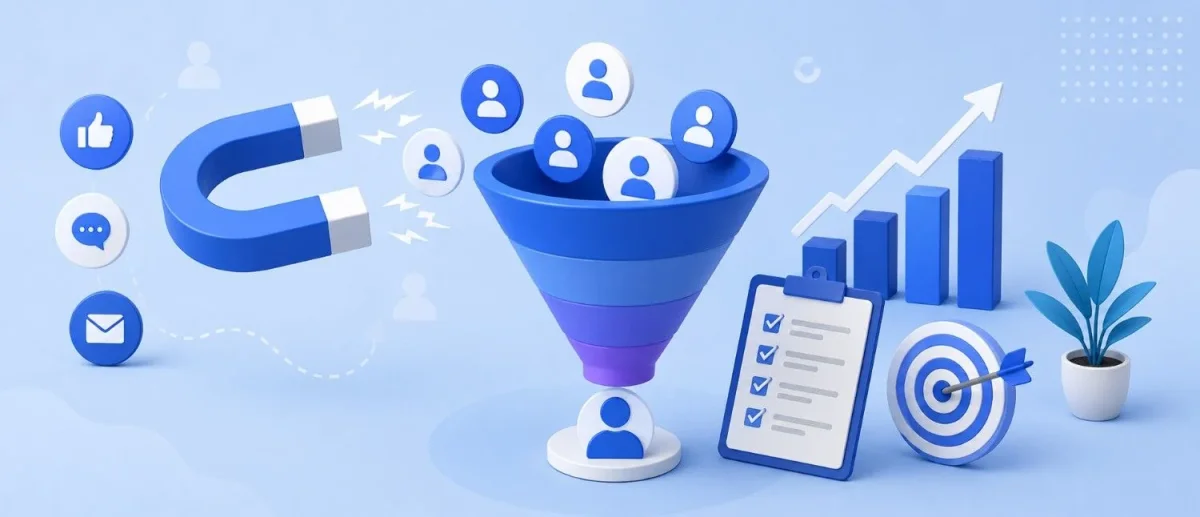
Leads do not arrive in one step. They move from a first visit, to a captured contact, to a marketing-qualified lead, to a sales-ready one, and finally to a customer. Each stage is narrower than the last, and each has its own leak.
Mapping this first changes what you optimize. A business drowning in traffic but starving for demos has a capture problem, not an awareness problem. One with plenty of leads and no sales has a qualification or nurture problem.
The funnel also tells you which number to defend. Total leads flatters a report but hides the truth. Cost per qualified lead, and the rate at which each stage converts to the next, are the metrics that actually reflect a healthy engine.
Work the leaks from the bottom up. A small lift in the lead-to-customer rate is usually worth more than a large lift in raw traffic, because it multiplies the value of every visitor you already have. Fixing the narrowest, most expensive stage first is almost always the fastest route to more revenue.
The Channels That Generate The Most Leads
No single channel wins for everyone, but each has a signature. The right mix depends on your buyer, your budget, and how fast you need results. These five do the heavy lifting for most digital marketers
Search and content
The compounding engine. Rank for the questions your buyers ask, then capture them with a relevant offer on the page. It is slow to start and hard to beat once it works, which is why many agencies use white-label SEO services rather than staff it in-house.
-
Target commercial and problem-aware keywords, not just high-volume terms, because intent matters more than reach for lead generation.
-
Pair each ranking page with a matching lead magnet or demo call to action, so the traffic you earn does not leave empty-handed.
-
Refresh and expand winning pages over time, since a single strong asset can generate leads for years at almost no marginal cost.
-
Content marketing generates roughly 3x more leads than outbound at 62% lower cost, per Demand Metric, which is why it anchors most programs.
The channel you own outright, and the one that converts nurtured interest into action. Every other channel rents its audience. Your list is yours.
-
Grow the list with gated content and clear opt-ins, never bought data that damages deliverability and trust.
-
Segment by behavior and stage, so a new subscriber and a repeat visitor get different, relevant messages.
-
Use email to move captured leads down the funnel with a planned sequence, rather than blasting everyone the same offer.
Paid media
The fastest way to buy attention when you need a pipeline now. It stops the moment you stop paying, which is why it works best alongside the compounding channels.
-
Match every ad to a dedicated landing page, not your homepage, so the message the visitor clicked is the message they land on.
-
Keep forms short, since each extra field costs completions, and ask only for what sales genuinely needs.
-
Track cost per lead and cost per qualified lead, not just clicks, so you scale the campaigns that produce buyers.
Social and community
Where trust is built before the buying moment arrives. Most social leads are earned indirectly, through consistent usefulness rather than a single hard sell.
-
Lead with genuinely helpful posts, then convert with lead forms or gated resources for the people who engage.
-
Prioritize the one or two platforms where your buyers actually gather, and ignore the ones where they do not.
-
Treat comments and direct messages as a live lead source, since a good reply often starts a real conversation.
Referrals and partnerships
The highest-trust leads you can get, and the most underused. A warm introduction converts at a rate cold traffic can only envy.
-
Ask happy customers for introductions at the moment they express satisfaction, when goodwill is highest.
-
Co-market with partners who serve the same buyer without competing, so both audiences gain something.
-
Build a simple referral incentive and a clear, repeatable ask, so the process becomes a reliable habit rather than a lucky one-off.
How to generate leads in digital marketing, step by step
Channels are the ingredients. This is the recipe. Run it in order and each pass compounds on the last.
-
Define the lead you want: Write down who qualifies and who does not, including industry, size, and role. A clear ideal customer profile keeps you from filling the pipeline with contacts sales will never call.
-
Build one strong offer: Create a lead magnet or demo that solves a real, specific problem for that buyer. One excellent offer that speaks to a genuine pain beats five generic ones.
-
Choose two channels to start: Pick the channels where your buyer already is, and go deep rather than spreading thin. Two channels done well outperform five done poorly.
-
Build the capture path: Send traffic to a focused landing page with a short form, a single clear value proposition, and one call to action. Remove every link that is not the conversion.
-
Set up fast follow-up: Route new leads to sales or an automated sequence instantly, because contacting a lead within five minutes sharply raises the odds of connecting while intent is still hot.
-
Nurture the rest: Most leads are not ready to buy today, so move them through a multi-touch email sequence that stays useful and keeps you top of mind until they are.
-
Measure cost per qualified lead: Judge each channel by the leads that convert to real opportunities, not the leads that simply fill a spreadsheet.
-
Double down and cut: Move budget toward what produces qualified pipeline, and stop what does not, reviewing the mix every month rather than every year.
Why nurturing decides your results
Most of the leads you generate will not buy on the first visit. What you do next separates programs that scale from programs that stall. 3 habits carry most of the weight.
Speed to lead
The first team to respond usually wins. Response time is the cheapest lever in lead generation, and it costs nothing but a system. Set up instant routing and an automated first reply so no captured lead sits waiting while intent cools.
A five-minute response can be the difference between a booked call and a dead record, purely because you reached the buyer while they were still thinking about you.
Lead scoring
Not every lead deserves the same effort. Score leads by fit and behavior so sales spends its limited time on the contacts most likely to close. A simple model based on job role, company size, and engagement signals such as pricing-page visits is enough to start.
It sharpens over time as you learn which behaviors precede real deals, and it stops your best reps from burning hours on browsers who were never going to buy.
Multi-touch sequences
Single follow-ups leave money on the table. Companies that nurture well generate meaningfully more sales-ready leads at lower cost, because a planned sequence keeps you present until the buyer is ready to act.
Aim for a series of genuinely helpful touches spread over weeks, not a countdown of increasingly desperate reminders. Each message should give the reader a reason to stay, whether that is a useful idea, a relevant case study, or a clear next step.
Where lead generation programs go wrong
Even a good channel mix underperforms when the basics slip. In the programs we rebuild for agencies, the same leaks appear again and again.
-
Chasing volume over fit, then blaming sales when the leads do not close, when the real fix is almost always a tighter, written definition of a good lead everyone agrees on.
-
Sending every click to a homepage instead of a focused landing page, so the visitor has to hunt for the thing they came for.
-
Capturing leads and then letting them sit, with no fast follow-up and no nurture, which quietly wastes the money spent to acquire them and hands warm prospects straight to a faster competitor.
Fix those three and most programs improve before you touch the channels at all. Lead generation is less about a clever tactic and more about a tight loop: attract the right person, capture them cleanly, and follow up before the moment passes.
Whether an agency builds this loop in-house or picks an outsourced SEO team, the discipline matters more than the org chart.
Build your lead engine with Pulse100x
Pulse100x builds and runs white-label lead generation and SEO for agencies, so you scale client pipelines while we handle execution. Contact us today!